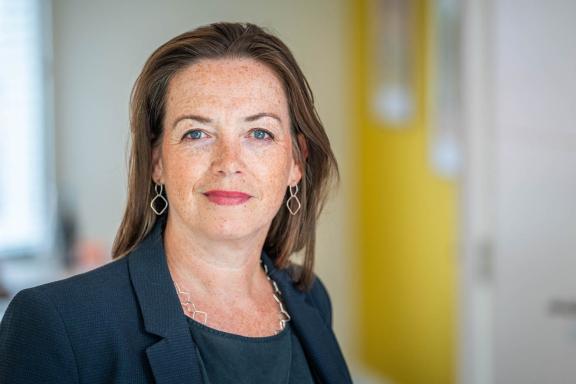
An interview with Eve McCurrich, Managing Director of investee, Whiteburn
Introduction
To mark the publication of our Investment Equalities Report 2026, we speak to Eve McCurrich, Managing Director of our investee Whiteburn, about her experience of building a career and leading a business in the housebuilding sector. Eve shares her thoughts on the barriers women in business can face, the importance of access to investment and support, and why greater visibility of female leadership matters.
Championing equality is always front and centre for us at The Bank, as explored by our Director of Insights and Impact Libby Watkinson in her informative Insights article, Quality employment: why good work matters. It takes an informed look at how quality of work impacts different groups. With women more likely to experience persistent low pay, part-time work and occupational segregation, the Bank asks - and will continue to ask - our portfolio companies to self-assess the maturity of their fair work practices and rate their performance against each of the five Fair Work principles to ensure ‘mature practice’.
In conversation with Eve McCurrich
What does it mean to see organisations such as the Scottish National Investment Bank actively supporting female entrepreneurs and business leaders?
It is encouraging because it shows a recognition that women leading businesses are an important part of Scotland’s economic future. That recognition needs to translate into access to investment, networks and opportunities to grow. Building a business takes resilience and determination, but it also takes capital.
In housebuilding, you can have the experience, the team and the demand for your homes, but you still need funding to deliver them. Barriers to obtaining funding for house building seem greater than ever, anyone delivering housing now requires access to long term patient capital and senior debt to support the financial outlays associated with transforming a piece of land into someone’s home.
The challenge for an SME is that our scale, which allows us to be attentive and adaptable, also makes us more exposed. A delay on one project can affect a significant proportion of our programme. A national builder may be able to spread risk across dozens of sites.
An SME may have only a few live developments, so one planning delay, utility problem or unexpected cost can have a disproportionate effect. I believe that organisations such as the Scottish National Investment Bank have an important role in helping capable business leaders turn ambition into something tangible. For my own industry, the economic and social value of housing is wide reaching, our country needs homes and for homes to be built we need more SME house builders.
The Bank’s values of Purpose, Passion and People couldn’t be more aptly met than supporting a business such as mine. Our purpose is to deliver much needed new homes, our passion is about place making and the homes we create, and our people are the communities, contractors, suppliers, staff, investors and clients whom we deliver homes with and for.
As a woman in a fairly male-dominated industry, what has been your experience of progressing into a senior leadership role?
I am a quantity surveyor by profession, and I started as a sponsored student with Laing Civil Engineering at Sizewell B nuclear power station. When I started I was one of a handful of women working on site but it is great to see career paths widened and more women in our industry. My career has taken me through a wide range of projects, but I have always loved the industry. Moving into leadership means taking that experience and accepting responsibility for the wider business: its culture, its people, its decisions and its future.
At Whiteburn, the challenge is maintaining and building a successful SME housebuilding business and drawing on support from my wider network of both colleagues and peers. I wont lie, at times in my career I have been asked some quite challenging and, I would say, blatantly sexist questions and I know I am not alone in that. I have always challenged these when I could, and taken the view of learning good things from those who have inspired me as well as noting “what not to do” from others.
Have you faced barriers or challenges that you feel were unique to being a woman in business? How did you navigate them?
I think it is useful to distinguish between the challenges of running a business and the additional challenges women can face within it. Construction is a demanding industry for anyone, but assumptions about who has the knowledge or authority can make it harder for women to establish themselves. My approach would be to stay grounded in the work: understand the detail, be clear about what you bring and be prepared to speak up.
There is also a responsibility on those of us in leadership to make sure people are heard and given opportunities. We should not expect the next generation simply to navigate the same barriers.
Have you seen changes in opportunities for women in your industry? What still needs to improve?
There is much more discussion about women’s place in construction and business leadership than when I began my career. That is welcome, particularly if it helps young women see the range of careers the industry offers. Construction needs commercial skills, technical knowledge, good communication and strong leadership, but it’s also not just about high-vis vests and boots on site. We need to make all career opportunities much clearer.
The real measure of progress is whether women can enter the industry, develop their careers and reach positions where they make and influence decisions. Recruitment matters, but so does progression, flexibility and access to responsibility.
What advice would you give to women considering their next step but doubting themselves?
Do not wait until you feel you know everything. There will always be something new to learn, especially when you are running a business. Look at the evidence of what you have already achieved: the problems you have solved, the responsibilities you have carried and the knowledge you have built. Give yourself credit for that.
Be prepared, ask questions and surround yourself with people who will support you and challenge your thinking. You can take the next step while still learning. Confidence often develops through doing the work.
What advice would you give to female founders seeking investment for the first time, and where should they turn for support?
Understand your business, your team and your numbers. Be clear about how much funding you need, what it will enable you to do and how the business will generate a return. Be equally clear about the risks and how you intend to manage them. Find advisers and mentors who understand your sector, and speak to other founders who have been through the process.
Think carefully about the type of investment too. You need someone who understands your business, its timescales and your ambitions. That is particularly important in housebuilding, where delivery takes time and is complex.
Why is increasing investment in female-led businesses important for Scotland’s economy and future growth?
Women make up almost half of Scotland’s workforce. We need to ensure that talent is reflected in business leadership and access to investment. If capable women have ideas and businesses with potential but cannot access the investment to develop them, we lose opportunities for jobs, innovation and growth. We also fail to provide role models for our future generations and expectation as to what can be achieved. In housebuilding, investment can translate into homes, work for a whole ecosystem of consultants, local contractors, apprenticeships and spending throughout the supply chain into the Scottish economy. The benefits of building a home reach well beyond the individual business.
Supporting more female-led businesses broadens the pool of people able to contribute to Scotland’s future. We need that ambition and capability.
What impact do you hope greater visibility of female leadership stories will have on the next generation of entrepreneurs?
I hope it helps women see a place for themselves in industries and roles they might otherwise overlook. I also think we should tell the full story: the training, the hard work, the difficult decisions, the sacrifices and the things we are still learning. Leadership can seem quite distant if you only see the finished version.