Tackling in-work poverty through fair work investment
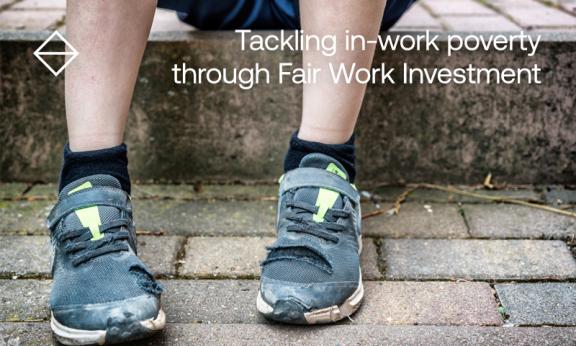
Rising numbers of working people in Poverty
Campbell Jensen-Graham, Associate - Impact Assessment and Reporting reflects on Fair Work at the Bank.
Scotland’s labour market is grappling with stubborn levels of in-work poverty, a consequence of low pay and insecure job structures that cannot match the increasing cost of living. Confronting this issue through investment activity demands bold, impact-driven solutions that centre on the creation of high-quality work as a core outcome of investment.
As a mission led investor, the Bank was established to help transform our communities by addressing the long-standing social and economic challenges that lead to inequality and poorer life outcomes.
Improving our communities
A key factor in improving our communities is ensuring that people are engaged in high-quality work; jobs that protect them from financial hardship, provide enough to address their everyday needs and secure them against uncertainty. Increasingly, however, work is no longer a predictable route out of poverty. For many, low wages, insecure contracts, limited progression opportunities and unpredictable shift patterns make it difficult to afford the basics, and impossible to move towards a more stable financial future.
With the number of working people in poverty is rising, the issue is only growing more pertinent. In 2025, around one in five Scots were living in poverty, with the share of working households – where one or more adults are employed full-time – rising from 20% to 33% in recent years. Women, minority ethnic communities, and disabled people are overrepresented in these statistics, illuminating the issue as disproportionately affecting those with protected characteristics who may be more likely to experience wider economic and social disadvantages.
Fair work and the Bank
In recognition of this challenge the Scottish Government has articulated its strong and explicit commitment to improving the quality of work for all Scots, aiming to make Scotland a leading Fair Work Nation. This commitment is embedded in its Fair Work Framework and its flagship policy, Fair Work First, which promotes work that offers employees security, opportunity, fulfilment, an effective voice, and respect.
At the Scottish National Investment Bank, we believe that economic growth must go hand-in-hand with social benefit. That’s why Fair Work is embedded within our impact investing framework. Every investment we make is assessed not only for its financial and environmental impact, but also for its contribution to the quality of work in Scotland.
Prioritising fair work conditions
We prioritise investments that offer secure employment and build priority Fair Work conditions into our investment agreements, such as paying the real Living Wage to all permanent staff and no inappropriate use of zero hours contracts. We recognise the importance of ensuring the real Living Wage keeps pace with rising living costs, helping all employees, particularly at-risk groups such as people with disabilities, manage essential expenses like energy and food.
Our commitment to Fair Work is also expressed within our Responsible and Ethical Investment Policy, which outlines our aim to promote a diverse and inclusive workforce.